Winter Roof Protection: Prepare for Ice, Snow, and Freezing Temps
Winter sneaks up fast. One minute your roof is just part of the background. The next, it’s the only shield between your family—or your business—and a freezing, snowy mess. At Sammy Roofing, we know how quickly a calm winter day can turn into an emergency roofing situation.
Don’t let ice, snow, and bitter cold catch you off guard. With the right knowledge and a little preparation, you can keep your roof strong through even the harshest winter months.
Common Winter Roof Risks ❄️
Snow doesn’t just look pretty on your roof. It brings weight and moisture that your shingles, flashing, and gutters might not be ready for.
Watch out for these cold-weather culprits:
- Ice dams: When warm air rises and melts snow, water runs down and refreezes at the edge, trapping more water behind it. That water can seep under shingles and cause leaks.
- Heavy snow loads: Wet, heavy snow weighs more than you’d think—just a foot can add thousands of pounds, risking sagging or even collapse, especially on flat roofs.
- Frozen gutters and downspouts: Clogged or frozen gutters back up water, which can damage soffits, fascia, and roof decking.
- Wind-driven ice: Blowing ice can lift shingles or break flashing seals, opening the door to leaks.
- Flash freeze cycles: Melting and refreezing stresses roofing materials, making small cracks into big problems.
Both residential and commercial roofs face these threats. But with some practical steps, you can minimize damage and keep your roof over your head—literally.
How to Prevent Ice Dams and Leaks
Think of ice dams like sneaky little beavers building a dam at the edge of your roof. Water backs up, and suddenly your attic is a swimming pool.
Here’s how to keep the water flowing where it should:
- Keep gutters clear: Clean gutters and downspouts before the first snowfall. Blocked gutters are like clogged arteries for your roof.
- Seal attic air leaks: Heat escaping into your attic melts snow unevenly. Use caulk or spray foam to seal gaps around pipes, vents, and chimneys.
- Check flashing: Roof flashing repair near you can stop leaks before they start. Pay special attention to chimneys, skylights, and valleys.
- Install ice and water shield: For new roof installation or roof replacement, ask for an ice and water shield underlayment along roof edges.
- Add attic insulation: More insulation means less heat escapes, keeping your roof cold and snow from melting prematurely.
Pro tip: The Federal Emergency Management Agency (FEMA) recommends at least R-30 insulation in attics for most snow-prone regions.
Safe Snow Removal Techniques 🧤
Snow piled up on your roof? Don’t grab a ladder and a shovel just yet.
Safety first, always:
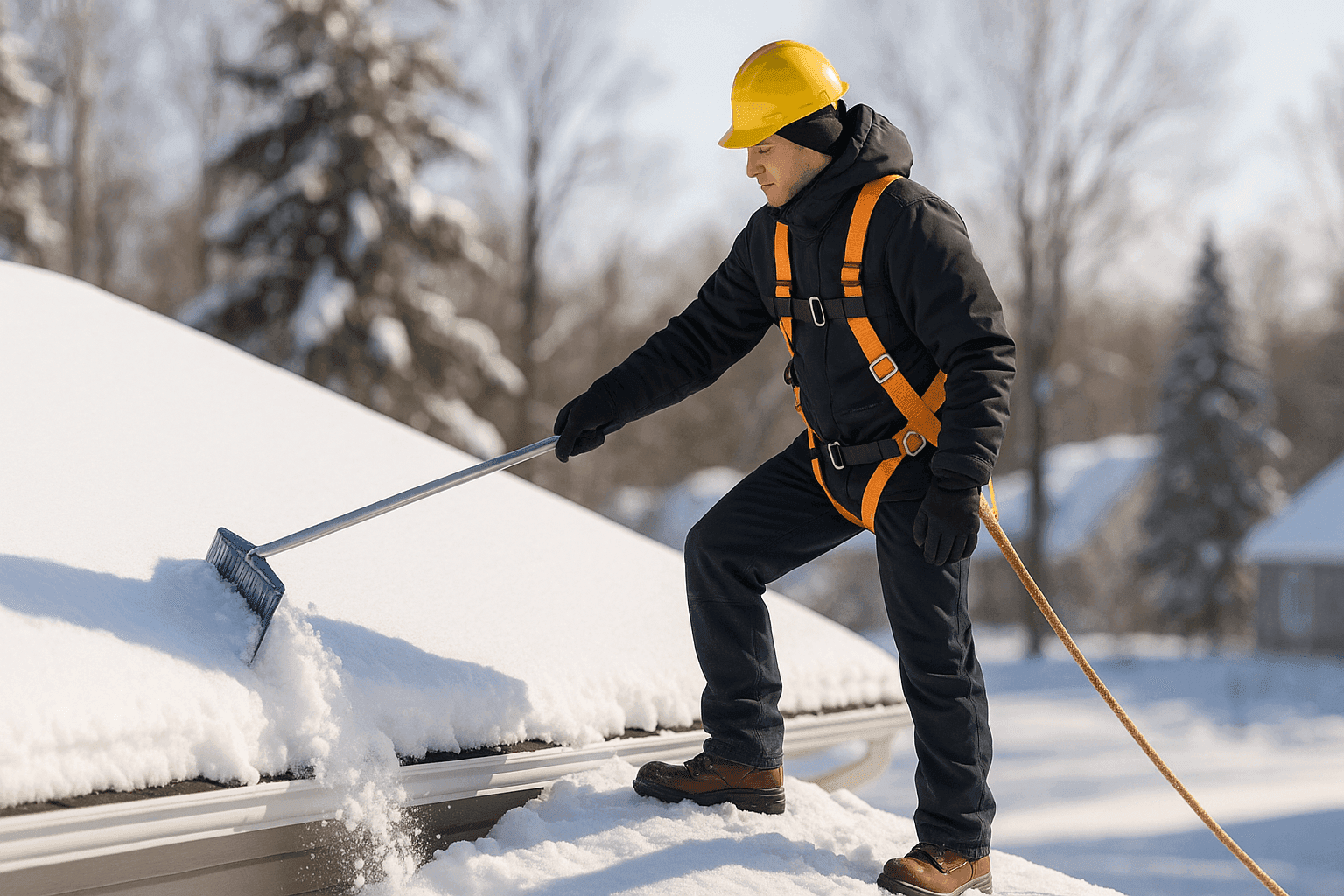
- Stay on the ground: Use a long-handled, roof-rated snow rake from the ground. Never climb a snowy, icy roof.
- Work in sections: Remove snow in small amounts, working downward—not upward—to avoid damaging shingles.
- Don’t chip ice: Chipping can break shingles, flashings, and sealants.
- Watch for falling icicles: Large icicles can be dangerous; knock them down with a broom handle from a safe distance.
- Leave the last inch: Don’t try to scrape the roof bare. Leaving a thin layer protects your shingles.
OSHA safety reminder: Roof work in icy conditions is dangerous. Certified technicians use fall protection gear and follow OSHA guidelines (see OSHA Standard 1926 for construction).
Insulation and Ventilation for Winter
Warmth in your home should stay inside—out of your attic and away from your roof.
Why it matters:
- Proper insulation in your attic keeps living spaces cozy but the roof cold, preventing uneven melting.
- Ventilation lets moist air escape, reducing condensation and mold risk.
- Balanced airflow (intake vents at the eaves, exhaust vents at the ridge) maintains temperature and humidity.
Signs you need help:
- Frost in the attic
- Ice forming inside roof vents
- Musty attic smells
If you spot these, it’s time for a ventilation and insulation checkup.
When to Call a Pro 🚨
Some jobs are best left to the folks with harnesses, ladders, and know-how.
Call Sammy Roofing for:
- Water stains on ceilings or walls—this could be a sign of a hidden leak.
- Sagging rooflines or creaking sounds after heavy snow.
- Large or stubborn ice dams you can’t reach safely.
- Storm damage, especially after high winds or hail.
- Leak repair, flashing, skylight, or chimney flashing issues.
Our certified team follows OSHA safety regulations and brings the right tools for every emergency roofing situation.
Winter Roof Preparation Checklist
Before winter sets in, walk through this quick list:
- [ ] Clean gutters and downspouts
- [ ] Inspect flashing around chimneys, skylights, and vents
- [ ] Check attic for leaks or wet insulation
- [ ] Top up attic insulation (aim for R-30 or higher)
- [ ] Seal attic air leaks with caulk or spray foam
- [ ] Trim overhanging tree branches
- [ ] Schedule a professional inspection if you spot any warning signs
Regional Advice for Snow-Prone Areas
Not all winters are created equal. Lake-effect snow, mountain blizzards, or coastal ice storms each have their quirks.
- Northern regions: Expect heavier snow loads. Flat roofs and commercial properties may need extra attention.
- Mountainous areas: Rapid freeze/thaw cycles make ice dam prevention critical.
- Coastal climates: Salt and moisture can corrode metal roofing and flashing—stay vigilant with inspections.
If your area sees regular snow, ask about metal roofing, tile roofing, or eco-friendly options designed for winter durability.
Certified Technician Tips
- Never ignore minor leaks: Small problems become big ones fast in cold weather.
- Don’t overload your roof: Removing snow gradually is safer than waiting until it’s too late.
- Inspect after every storm: Wind and flying debris can loosen shingles, gutters, and flashing.
- Use only roof-rated products: From sealants to snow rakes, the right tools protect your roof and your safety.
Winter Roofing FAQ
How much snow is too much for my roof?
Most roofs can handle 20 pounds per square foot, but wet snow is heavier than dry. If snow is over 6 inches deep and wet, consider removal.
What if I see icicles?
A few small icicles are normal, but large, persistent icicles suggest poor insulation or ventilation. Time for a checkup.
Is emergency roofing available after hours?
Yes, Sammy Roofing offers emergency services 24/7 to tackle leaks, flashing repair, and storm damage restoration.
Can I use salt or chemicals on my roof?
Avoid it! Salt and deicers can damage shingles, gutters, and landscaping below. Stick to safe, mechanical removal or call a professional.
Final Thoughts
Winter doesn’t have to be the enemy of your roof. A little prevention goes a long way—think of it as putting a warm blanket over your home or business.
If you need help with roof flashing repair near you, emergency roofing, or just want peace of mind before the next snowstorm, our certified technicians are here to help. We follow industry best practices, OSHA safety standards, and bring years of hands-on experience to every job.
Call Sammy Roofing now — or reach us anytime at 877-359-9286 .