Emergency Roofing Guide: What to Do Before Help Arrives
When the sky cracks open and the rain pours in, panic can strike as fast as a summer thunderstorm. Your home or business—your safe haven—suddenly feels exposed. At Sammy Roofing, we know every second counts during a roofing emergency. That’s why we’re here, around the clock, ready to help.
But what should you actually do before our crew arrives? Here’s a clear, step-by-step guide to help you take control, protect what matters, and avoid common pitfalls.
Recognize a Roofing Emergency 🌧️
Not every drip or draft is a five-alarm fire, but some signs demand immediate action. Here’s how to spot a true emergency:
- Sudden Leaks or Water Intrusion: Water pouring through the ceiling or walls, especially after heavy rain or hail.
- Storm or Wind Damage: Missing shingles, torn-off flashing, or visible holes after a windstorm, tornado, or hurricane.
- Sagging Roof Deck: A roof that’s bowing or showing signs of structural failure.
- Large Debris Impact: Fallen tree limbs, flying debris, or collapsed chimneys after a storm.
- Fire or Smoke Damage: Signs of burning or charring near the roofline.
If you see any of these, treat it as urgent. Fast action can mean the difference between a minor repair and a major rebuild.
Steps to Take Before Help Arrives
Think of this as your emergency playbook. The goal? Buy time and minimize damage—safely.
- Stay Calm. Take a breath. Panic leads to mistakes.
- Assess from a Distance. Step outside or look through windows. Never climb onto a damaged roof.
- Move Valuables. Relocate electronics, furniture, and important documents away from the leak or affected area.
- Contain the Water. Place buckets or large containers under drips. Use towels to soak up small puddles.
- Turn Off Electricity (If Safe). If water is near light fixtures or outlets, shut off power at the breaker box.
- Document the Damage. Snap clear photos and make notes. This helps with insurance claims later.
- Call for Emergency Roofing Help. The sooner you contact Sammy Roofing, the faster we can get on site.
Temporary Protection Methods (Tarps, Buckets)
Sometimes you need to improvise. Here’s how to keep the elements at bay until the professionals arrive:
Using Buckets and Towels
- Place buckets directly under leaks.
- Rotate towels to keep floors dry.
- Check every 30–60 minutes, especially if rain is ongoing.
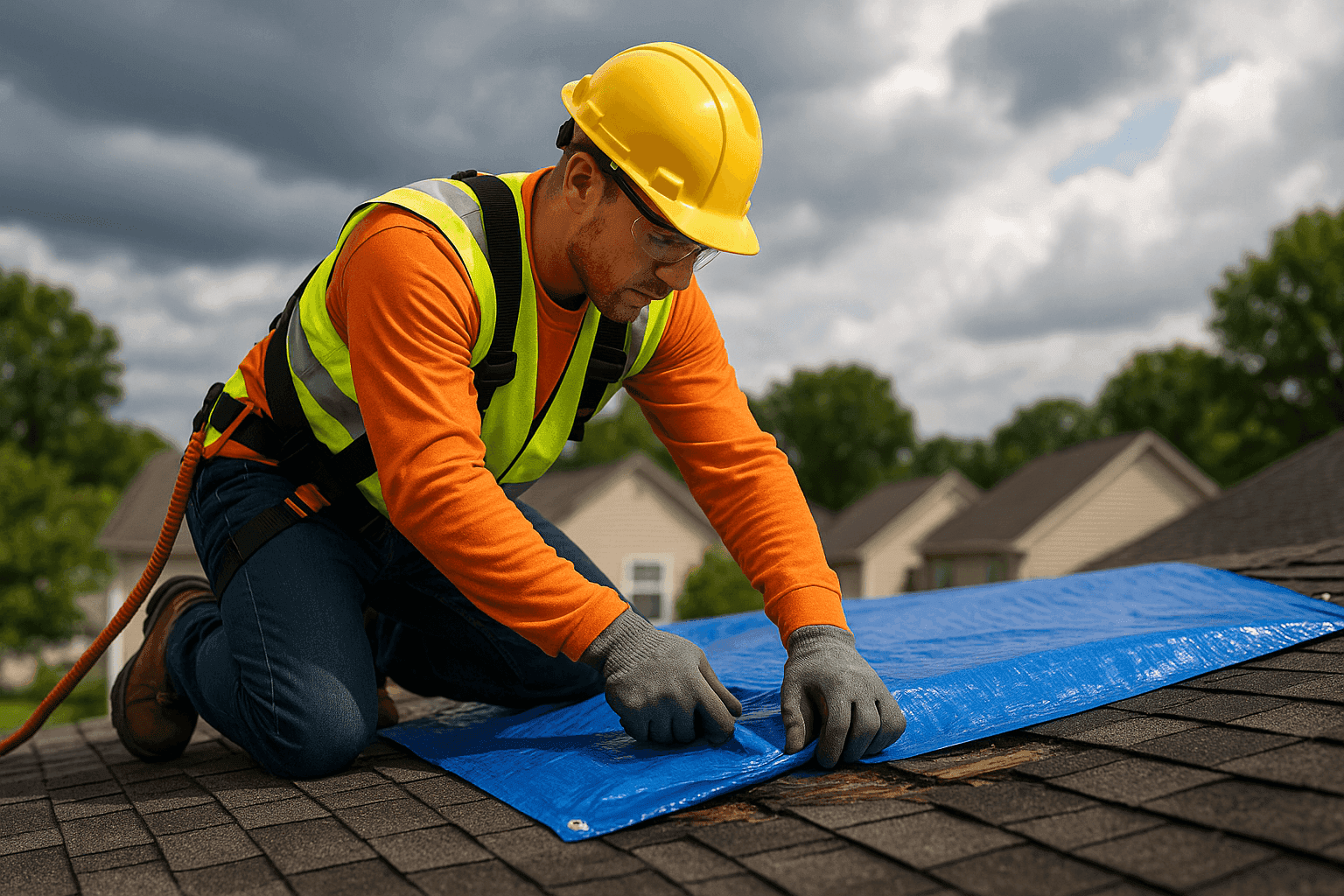
Emergency Roof Tarping
If you can safely access a lower section of the roof—like a porch or garage—consider:
- Unfolding a heavy-duty tarp and securing the edges with boards or bricks.
- Never use nails or screws if you’re unsure what’s underneath—hidden wires and water can be dangerous.
- Avoid climbing on steep or wet roofs. Leave second-story or complex tarping to pros.
Sealants and Quick Patches
- Only apply roof sealant or caulk to small, obvious cracks you can reach from the ground or a stable ladder.
- Beware: Overdoing it can make a mess for roofing crews and slow down permanent repairs.
Safety Precautions
Safety comes first—always. No repair is worth a trip to the ER.
- Never Climb on a Wet or Damaged Roof. Even pros use harnesses and safety lines.
- Watch for Falling Debris. High winds or unstable structures can bring surprises.
- Wear Rubber-Soled Shoes and Gloves. If you must enter a wet area, reduce your risk of slips and shocks.
- Beware of Downed Power Lines. After major storms, always look up and around before moving outside.
- Follow Local Weather Alerts. Storms can double back. Use NOAA Weather Radio or your local news for updates.
These steps echo guidance from the Occupational Safety and Health Administration (OSHA) and the National Roofing Contractors Association (NRCA).
When to Call for Professional Help 📞
Some things are best left to people with the right tools, training, and insurance.
Call Sammy Roofing Immediately If:
- Water is entering rapidly or pooling in ceiling light fixtures.
- You notice structural sagging, cracking, or shifting.
- Shingles, tiles, or metal panels have blown off across large sections.
- There’s visible fire or electrical hazard.
- A tree, pole, or large debris has punctured the roof.
Even if you’re unsure, err on the side of caution. Our emergency roofing team is trained for fast, safe response—day or night.
Quick Safety Checklist
- [ ] People and pets are safe, away from damaged areas.
- [ ] Electricity is off where water intrudes.
- [ ] Buckets/towels are in place for leaks.
- [ ] Photos of damage are taken.
- [ ] Emergency roofing help is on the way.
DIY vs. Call a Pro
You might be handy, but some repairs are like wrestling a bear—best left to those with armor.
DIY: What’s Safe
- Placing buckets or towels under drips.
- Moving valuables, unplugging electronics.
- Applying duct tape or small patches to accessible leaks.
Leave It to Pros
- Climbing on the roof or using ladders during storms.
- Tarping steep, high, or heavily damaged roofs.
- Repairing flashing, skylights, or structural elements.
- Dealing with electrical or fire risks.
Remember: Even a small mistake can lead to bigger problems or personal injury.
What Pros Do On Arrival
When Sammy Roofing pulls up—usually within hours of your call—here’s what you can expect:
- Rapid Assessment: We inspect from the ground and inside, looking for obvious and hidden dangers.
- Temporary Weatherproofing: Emergency tarps, sealants, or plywood go up to keep water out.
- Detailed Documentation: We photograph and note all damage for your records and insurance.
- Clear Communication: We explain what needs to happen next, what’s safe, and what’s not.
- Plan for Permanent Repair: Depending on the situation, we’ll schedule follow-up work or start immediate repairs.
Our teams follow guidelines from NRCA and strict local building codes to ensure every step is safe and code-compliant.
Prevention & Maintenance
The best emergency? The one that never happens. Here’s how to stack the odds in your favor:
- Annual Roof Inspections: Schedule a pro inspection every year, especially after major storms.
- Gutter Cleaning: Keep gutters and downspouts free of leaves and debris.
- Flashings and Sealants: Check for cracks or gaps in flashing around chimneys, skylights, and vents.
- Attic Checks: Look for wet insulation, mold, or sunlight peeking through rafters.
- Trim Trees: Remove overhanging branches that could fall during storms.
A little attention now can save a mountain of trouble later.
Costs & Time Factors
Emergency roofing isn’t one-size-fits-all. Here’s what can affect timing and costs (without quoting numbers):
- Severity of Damage: Minor leaks can often be patched quickly. Major structural failures take longer.
- Weather Conditions: Storms, snow, or ice can delay safe access.
- Type of Roof: Shingle, metal, tile, or flat roofs require different tools and materials.
- Access: Multi-story or steep roofs need special equipment.
- Parts and Materials: Custom flashing or specialty shingles may require extra time to source.
Insurance may cover some or all emergency repairs—check your policy and keep detailed documentation.
When It’s an Emergency
Not sure if your situation qualifies? Ask yourself:
- Is water entering right now and causing visible damage?
- Has a section of roof collapsed or caved in?
- Is anyone’s safety at risk?
- Are there exposed wires, fire, or electrical hazards?
If you answer “yes” to any of these, call for emergency roofing help immediately.
FAQ
How quickly can emergency roofing crews arrive?
Most teams—including Sammy Roofing—respond within hours, day or night. Severe weather or road closures may affect timing, but safety is always the priority.
Will insurance cover emergency roofing repairs?
Many policies cover sudden, accidental damage (like storms or fire), but not long-term neglect. Document everything and contact your insurer promptly.
What’s the best way to temporarily stop a leak?
Buckets, towels, and tarps are your best friends. Focus on containing water and preventing further damage—leave permanent fixes to the pros.
Should I try to go on the roof myself?
No. Wet, damaged roofs are extremely dangerous, even for those with experience. Stay safe and wait for trained professionals.
Local & Seasonal Considerations 🌪️
The U.S. is a patchwork of weather extremes. Here are a few region-specific tips:
- Southeast: Watch for hurricane winds, torrential rain, and flying debris. Secure loose items around your property.
- Midwest: Tornadoes and hail can strike fast. Identify safe interior rooms before storms hit.
- Northeast: Heavy snow and ice dams can cause leaks and collapse. Clear gutters before winter and watch for icicles.
- West: Wildfires and high winds threaten roofs with embers or falling branches. Keep roof surfaces free of debris and trim back trees.
No matter where you live, have an emergency plan—and keep Sammy Roofing’s number handy.
Final Thoughts
Roofing emergencies are stressful, but you don’t have to face them alone. Take a deep breath, follow these steps, and know help is on the way. With Sammy Roofing’s 24/7 emergency service, you’ll have a partner every step of the way—from first call to final repair.
Call Sammy Roofing now — or reach us anytime at 877-359-9286 .